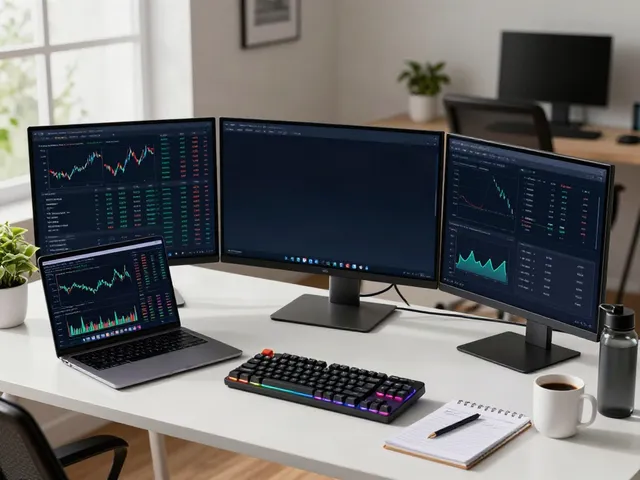
Understanding Financial Data Providers
In today's fast-paced financial landscape, the role of financial data providers is becoming increasingly critical. These organizations collect, analyze, and disseminate a plethora of market data in real-time, enabling businesses and individual investors to make informed decisions. As industries evolve and technology advances, especially in the realm of blockchain and cryptocurrency, the demand for accurate, timely data is at an all-time high. This article delves into the intricacies of financial data providers and their relevance in modern trading and investment strategies, focusing on their application for cryptocurrencies and the emerging decentralized finance (DeFi) sector. When exploring options, 金融数据提供商 provides comprehensive insights tailored to developers and researchers alike.
What are Financial Data Providers?
Financial data providers are companies that aggregate, analyze, and offer various types of financial information to clients, including institutional investors, private investors, and financial institutions. Their services span across several financial assets, including stocks, bonds, commodities, and cryptocurrencies. They play a crucial role in the day-to-day operations of traders and investors by providing access to the latest market developments, historical data, and analytical tools necessary for effective decision-making.
Types of Market Data Available
The market data provided can be categorized into several types, including:
- Real-Time Data: This includes current price action for various financial instruments.
- Historical Data: Historical prices and volumes help analysts spot trends and cycles.
- Reference Data: Data that provides essential details about securities, companies, and various financial metrics.
- Administrative Data: This comprises details about market infrastructure, such as exchanges.
Importance of Real-Time Data in Trading
Real-time data is paramount for decision-making in the financial markets. In high-frequency trading, for example, the ability to process real-time information can make or break a trade. Traders leverage this data to execute trades quickly and avoid slippage, which can occur due to price volatility shortly after a decision is made. For individual investors, real-time data allows for more informed trading strategies regarding entry and exit points in the market.
How Financial Data Integrates with Blockchain
Blockchain Fundamentals for Financial Data
Blockchain technology works as a decentralized digital ledger that records transactions across multiple computers in such a way that the registered transactions cannot be altered retroactively without the alteration of all subsequent blocks. It allows transparently verifiable and irreversible records, crucial in establishing trust between parties in online transactions.
Different Types of Cryptocurrency and Their Use Cases
Cryptocurrencies can be classified into different categories:
- Payment Cryptocurrencies: Assets designed for online purchases, like Bitcoin (BTC) and Litecoin (LTC).
- Smart Contract Platforms: Networks that permit programmed contracts, such as Ethereum (ETH) and Cardano (ADA).
- Stablecoins: Cryptocurrencies pegged to traditional assets to ensure stability, e.g., USDT and USDC.
- Utility Tokens: Tokens that provide users with access to a product or service within a blockchain ecosystem.
- Governance Tokens: Tokens that allow holders to vote on changes and developments within a protocol.
Leveraging Financial APIs for Blockchain Projects
Financial APIs are crucial for developers and firms looking to integrate financial data into their blockchain applications. They provide a seamless bridge between blockchain systems and external financial systems, enabling functionalities such as price feeds, wallet operations, and transaction verifications.
Advanced Trading Strategies with Market Data
Technical Analysis Methods Using Financial Data
Technical analysis involves analyzing market data, predominantly price and volume, to forecast future price movements. Traders utilize various indicators, such as:
- Moving Averages: Moving averages smooth price data to develop a trend direction.
- Relative Strength Index (RSI): This momentum oscillator measures the speed and change of price movements.
- Moving Average Convergence Divergence (MACD): This trend-following momentum indicator shows the relationship between two moving averages of a security’s price.
Effective Risk Management Techniques
Risk management is crucial in trading. Effective techniques include:
- Position Sizing: Calculating the amount of capital allocated to a trade.
- Stop-Loss and Take-Profit Strategies: Automated mechanisms to exit trades at favorable or unfavorable prices.
- Diversification: Spreading investments across various assets to mitigate risk.
Portfolio Diversification Strategies in Crypto
Investing in various cryptocurrencies or asset classes can minimize risks associated with individual investments. Utilizing diverse coins, such as Bitcoin, Ethereum, and altcoins, allows traders to counterbalance losses from any one asset's market volatility.
DeFi and Financial Data: A Perfect Match
Yield Farming and Financial Data Insights
Yield farming involves lending your cryptocurrency assets to generate high returns or rewards in the form of additional cryptocurrency. Financial data providers play a pivotal role in helping users identify the best platforms and strategies for yield farming, including information about potential returns and risks involved.
DeFi Protocols and Their Implications for Investors
DeFi protocols enable new financial services ranging from lending platforms to decentralized exchanges. These protocols often operate without a central authority, giving rise to innovative financial products. Investors can leverage financial data to analyze the health and security of these DeFi applications.
The Future of Decentralized Financial Data Solutions
With the emergence of DeFi, the financial data landscape is set to evolve further, emphasizing the need for real-time, accurate data that can support complex transactions without centralized oversight.
Ensuring Security and Compliance in Crypto Trading
Best Practices for Wallet Security and Key Management
Safe cryptocurrency storage is essential. Utilizing hardware wallets for offline storage significantly reduces the risk of hacks. Regularly updating security measures and using two-factor authentication (2FA) can also enhance the safety of funds.
Regulatory Compliance in the Cryptocurrency Space
The regulatory landscape for cryptocurrencies is rapidly changing. Understanding local laws, including Anti-Money Laundering (AML) and Know Your Customer (KYC) requirements, is vital for compliance. Additionally, adhering to SEC regulations and ensuring due diligence for investment is crucial.
Common Scams and How to Avoid Them
Scams in the crypto space can take many forms, including phishing attacks, Ponzi schemes, and pump-and-dump schemes. Education and awareness are key to preventing losses, which include recognizing red flags such as unrealistic promises and unfamiliar wallets.
What are the key benefits of using Financial Data Providers?
Financial data providers enhance market insights, enabling informed decision-making, facilitating better trading strategies, and providing the ability to navigate the complexities of the financial markets more effectively.
How can Financial Data impact trading strategies?
Access to up-to-date market data allows traders to adjust their strategies in response to market movements and emerging trends, ultimately improving their chances of success in volatile markets.
What are the security measures for handling financial data?
Key security measures include robust encryption practices, regular audits of systems, employee training on data handling, and compliance with regulatory requirements to ensure data security and integrity.
Can I trust Financial Data Providers for my crypto investments?
While many reputable financial data providers exist, it is essential to conduct thorough research and verify their credibility and the accuracy of their data before relying on them for investment decisions.
What are the trends in the market for Financial Data Providers?
Trends in the financial data ecosystem include the growing importance of real-time data analytics, AI-driven insights, and expanded access to data through APIs, which facilitate integration with various blockchain projects and trading platforms.